From Intelligence to Impact: Avi’s 13-Year Journey to the Top
From starting out in the Boyd & Moore Intelligence Centre in Pune, India, to becoming one of the company’s top-performing directors in Tokyo, Avi’s 13-year journey is a story of consistency, adaptability and long-term thinking. Now leading the technology practice at the Boyd & Moore Japan office, he has built a reputation not only for sustained billing performance but also for his deep market expertise and lasting client relationships.
In this conversation, Avi reflects on the early foundations that shaped his career, the transition from research to client facing consulting, and the lessons learned from building credibility in a new and highly nuanced market.
He also shares the habits, mindset and leadership principles that have strengthened his success, and what continues to motivate him as he looks to the future.
Let’s start at the beginning. What first brought you to the India Intelligence office 13 years ago, and what do you remember most about those early days?
I joined the India Intelligence team because I wanted to build something long term. The research-driven work and opportunity to understand the market really stood out.
What I remember most from those early days is the intensity. It was a steep learning curve and at times quite demanding but looking back it built a strong foundation in discipline and attention to detail. That is something I still rely on even today.
Avi and colleagues from the Boyd & Moore Intelligence Centre in 2010
You began your career in Intelligence before moving to Japan as a consultant. What motivated you to make that move? What were some of the biggest adjustments you had to make?
I think the motivation was quite natural. Intelligence gave me a strong base but over time I felt the need to be closer to the market working directly with clients and candidates and having a more visible impact.
The biggest adjustment was really understanding how business works in Japan. It is much more about trust, patience and showing up consistently over time.
Communication was another area, learning to listen more, read between the lines and not rush conversations. I still remember some of the early meetings where a lot of the conversation were more about building trust than business. Over time that became a strength.
You have been consistently recognised as one of the company’s top billers. What principles or habits have driven that sustained level of performance?
Consistency and clarity of focus have been key. Staying close to clients and candidates, prioritising where we add value, and doing the basics well over time. For me, it’s less about short-term results and more about building long-term relationships. The business follows from that.
Was there a defining moment in your career that changed your trajectory? How did that shift your mindset?
Moving to Japan was a defining moment. It pushed me out of my comfort zone quite a bit. The first few months especially were about figuring things out from scratch. But in hindsight that phase really accelerated both my professional and personal growth.
Early on it was all about learning and execution. As a consultant it became more about ownership, managing clients, closing roles and delivering results. Now, as a director, the focus is broader. It is about building a strong team, developing people and creating something sustainable beyond individual performance.
The early phase in Japan was probably the most challenging. Building credibility in a new market without an established network takes time. It taught me patience more than anything else. Things do not always move quickly but consistent effort over time does compound.
Team BMIC, back in 2012
Thirteen years is a major milestone. What has kept you committed to the firm for over a decade? Do you have a moment you are most proud of?
I think it comes down to growth and trust. The firm has given me the opportunity to take on new challenges over time, including building in Japan.
Also, the relationships both internally and with clients have made the journey meaningful.
Building a strong presence in the Japan market is something I am proud of. Not just in terms of placements, but the long-term relationships we have built with clients and candidates. That is what really matters to me.
Tech can be a somewhat volatile market. How do you feel it has changed over your time at BMES? Have you seen any key trends or challenges in the regional market right now?
It’s become more volatile, but also more interesting.
When I first started, hiring in tech, even in Japan, was relatively predictable. Large enterprises were driving most of the demand, hiring cycles were longer, and expectations were stable.
Over time, especially in the last five to seven years, that has shifted quite a bit. From what I have seen in Japan, a lot of the demand now is coming from global startups and scale-ups entering the market, particularly in AI, cybersecurity, and cloud.
These companies move faster, expectations are higher, and the talent they need is very specific, often bilingual and already proven in similar environments.
At the same time, candidates have become more selective. They’re looking beyond compensation now, focusing more on leadership, product credibility, and long-term growth.
The core challenge hasn’t really changed though. The pool of senior, bilingual talent is still limited. The difference now is that many more companies are competing for the same people, which makes having a clear and well-positioned hiring strategy even more important.
What does your process look like from search to closing a senior role?
At a high level, it’s straightforward, but the detail is where most of the value sits.
The first step is always alignment. We spend time upfront not just defining the role, but shaping what success really looks like and what kind of individual will actually work in that environment.
From there, we build a full market map. In Japan, you can’t rely on inbound candidates, so it’s about proactively identifying and engaging the right individuals, most of whom are not actively looking.
As we move forward, the focus shifts to the quality of conversations. We are effectively representing the client in the market, so how we position the opportunity, how we guide the client, and how we manage candidate expectations all play a big role.
Closing is usually the most nuanced part. In my experience, it’s about keeping both sides aligned over time, advising on trade-offs where needed, and making sure there are no surprises at the final stage.
Avi (far right) with Boyd & Moore Senior Consultant Rishi Gambhir, Ushin Rai, Arun Ramachandran and Sumil Kumar Palakandathil (left to right) from his client QBurst.
How do you understand the broader business context when starting a search?
This is probably the most critical part of the process. I try to move beyond the job description very quickly. What really matters is understanding why the role exists. Is it growth, market entry, turnaround, or succession?
We spend time with multiple stakeholders to get a full picture, not just the hiring manager. That includes how Japan fits into the global strategy and what success should realistically look like over the next 12 to 24 months.
From what I have seen, success in Japan can vary significantly depending on the company’s stage. In some cases, it’s about building from scratch. In others, it’s about scaling or stabilizing an existing business.
Our role is to bring that context together and advise on the type of profile that will really deliver in that specific situation, rather than just matching a job description.
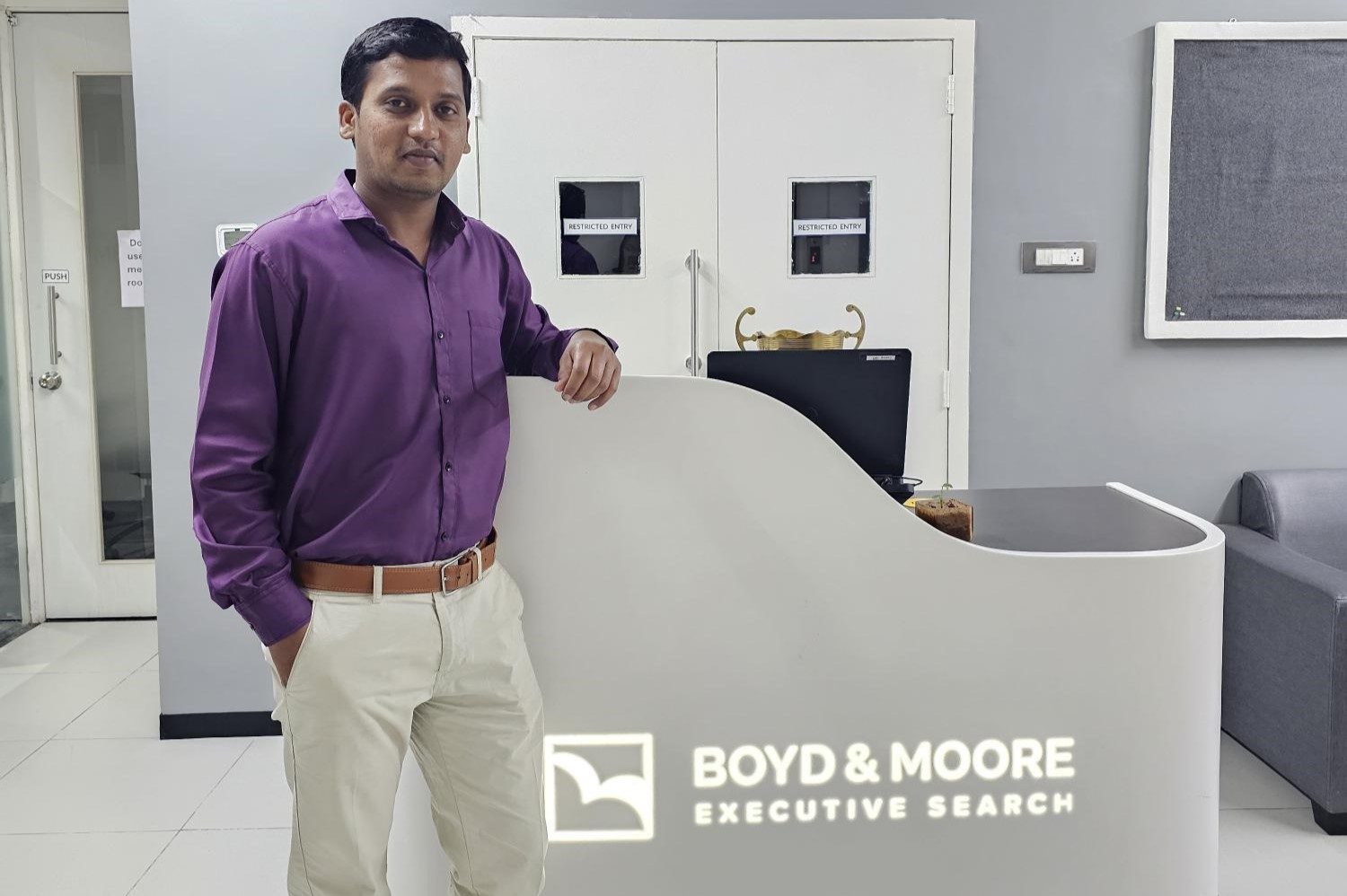
Avi at work in the Japan office!
What has been key to building relationships with large firms?
Consistency and transparency over time.
Most of our relationships have been built over many years. It’s not just about delivering individual hires, but about being a partner through different stages of growth.
In Japan especially, trust takes time. Clients want to know that you understand their business, their culture, and the realities of the market.
In my experience, being transparent is key. It opens the door to real consulting conversations. When you bring clear market realities, clients appreciate that, but where trust really builds is when you combine that with your experience and help them navigate the most effective way forward. If something isn’t working, or expectations are unrealistic, it’s always better to address it early rather than struggle later.
Over time, that’s what allows you to move beyond execution and become a true advisor.
Do you have any advice for organizations hiring in Tokyo/APAC?
The biggest thing is speed and clarity but also having a well-thought-out approach.
In markets like Tokyo, the best candidates don’t stay available for long. If the process is slow or unclear, you will lose them. The second point is positioning. Most senior candidates in Japan are not actively looking, so they need a clear reason to engage. Why your company, why now, and what success looks like for them.
Finally, be realistic about the market. Bilingual, senior talent in Japan is limited. Being flexible on certain requirements, while staying clear on what truly matters, can make a big difference.
How about some advice for senior candidates?
Be clear about what you want next and be intentional about your decisions.
A lot of senior candidates in Japan are in stable roles, so when they consider a move, it needs to be for the right reasons. Compensation matters, but it’s rarely the main driver at that level.
I usually encourage candidates to think about impact. What will you be building, fixing, or scaling? Who will you be working with? And how does this role position you for what comes next? It’s also important to really understand the company. Especially with startups or new entrants, things can look very different on the surface.
The candidates who tend to make the best moves are the ones who approach the process thoughtfully, ask the right questions, and take a longer-term view of their career.
Looking ahead what excites you most about the next chapter both for the business and for you personally?
The pace of change in the technology space especially around AI is exciting. There is a lot happening and a lot of opportunity to build meaningful partnerships.
For me personally it is about scaling the team further and developing the next set of top billers and leaders.
Finally, if you had to describe your 13-year journey in three words what would they be and why? Consistent, evolving and rewarding.
Consistent in effort, evolving with each phase of the journey and rewarding in terms of growth and the relationships built along the way.





1 Comment
Test